Ceramic component feeders for controlled orientation
A ceramic-component feeder must deliver the required orientation while preserving the features the next process relies on. Compare handling concepts using real parts and a defined damage assessment, including loading, recirculation and release into the assembly station.
Speak directly with Sorting Solutions about gentle ceramic-component feeding.
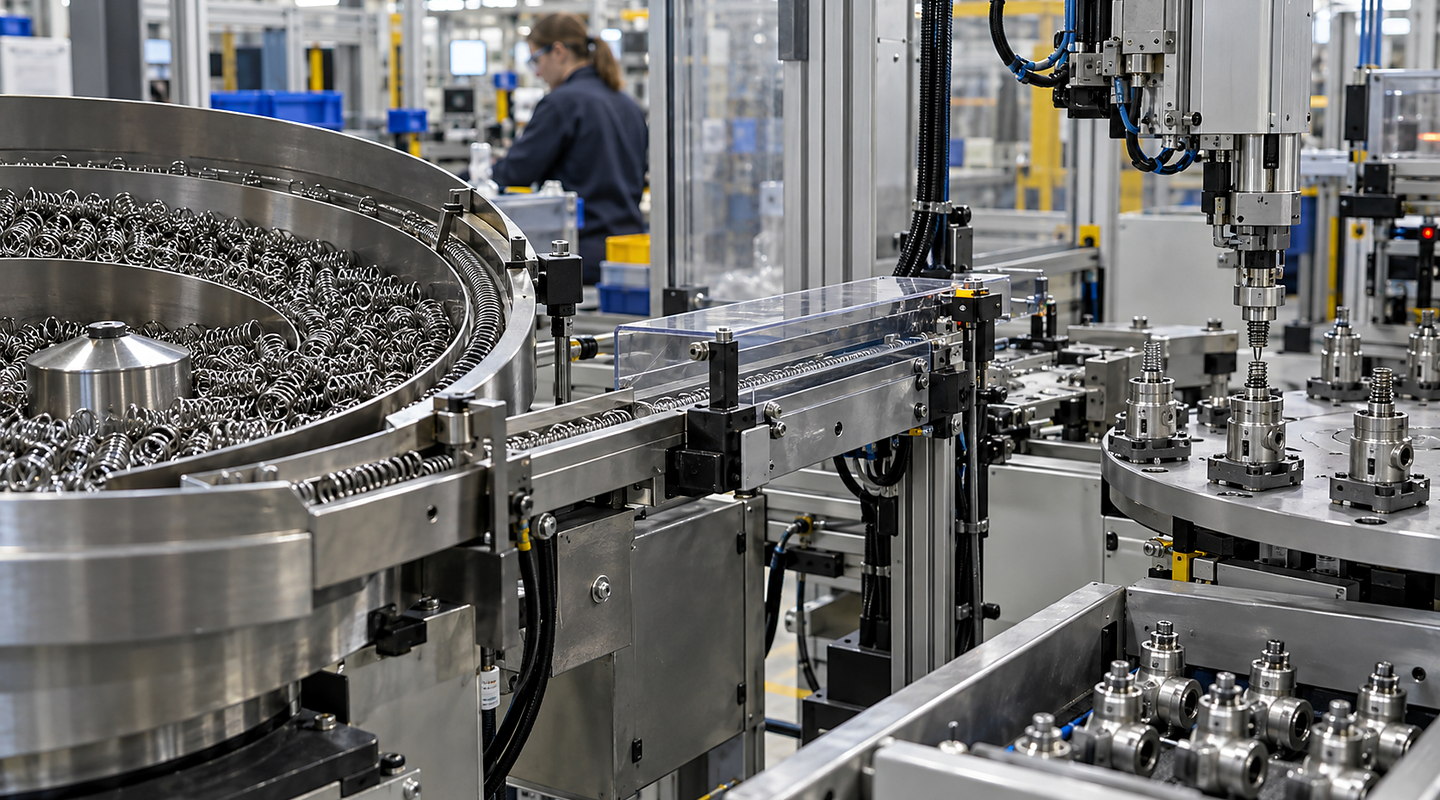
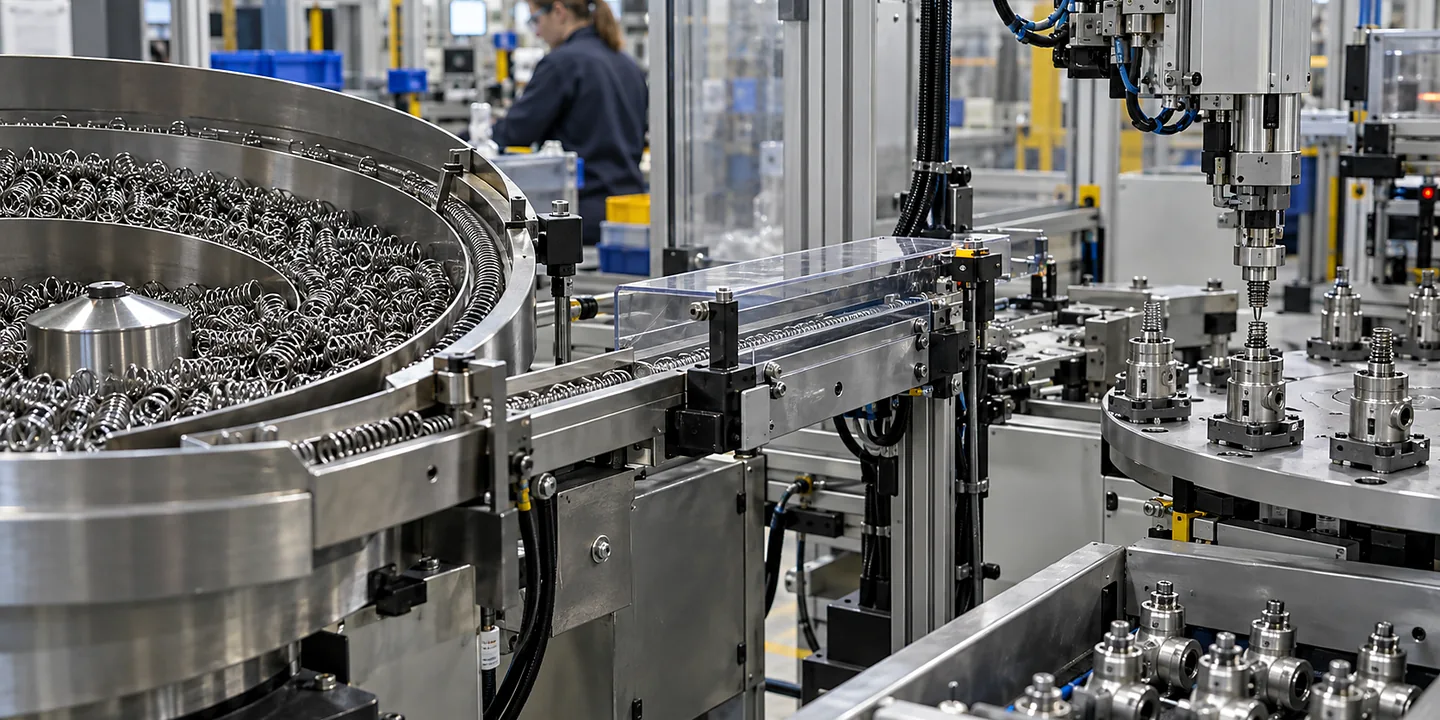
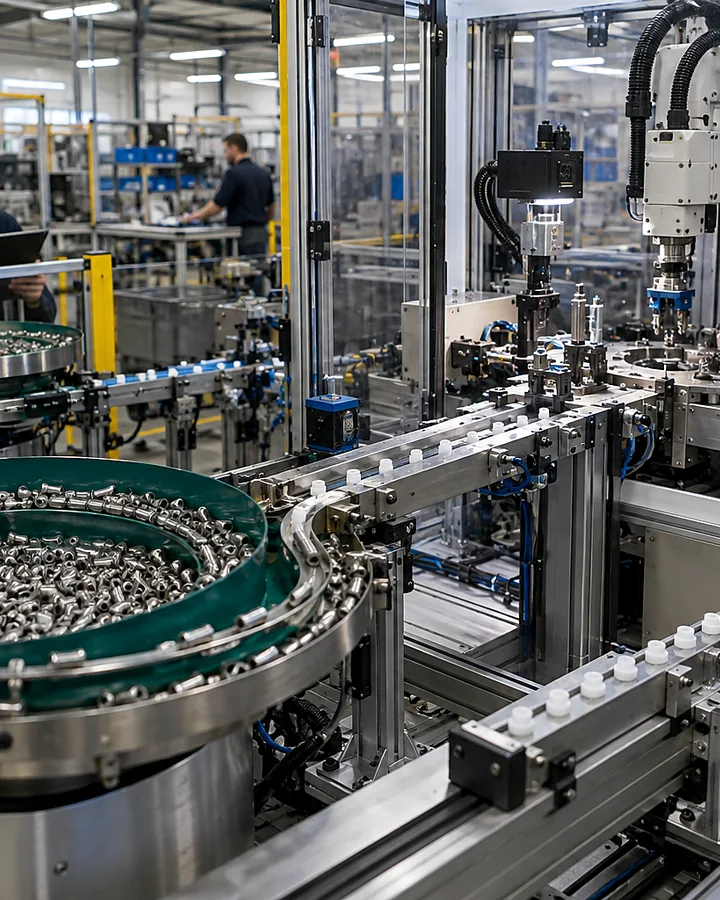
Photographs show general component feeding, including coil springs. Ceramic feeding must be assessed with the actual parts, required orientation and agreed damage limits.
Quick answer
How can we orient ceramic components while controlling chipping?
Identify the fragile edges and the marks or chips that make a ceramic part unacceptable. Trial representative components through loading, separation and delivery, checking their condition before and after. Define the final orientation and include replenishment and jam recovery when comparing the handling concept.
Selection criteria
Assess the whole route for fragile parts
Use these decisions to define the proposed equipment and the checks needed for your application.
Decision 1
Define unacceptable damage
Identify edges, bores, coatings and contact surfaces that must remain intact. Provide examples of acceptable and rejected condition with the inspection method used. Without a shared damage definition, a feeder trial can look successful while producing unusable parts.
Decision 2
Choose bulk or controlled presentation
Show how components arrive: loose, bagged, layered or in trays. Compare the labour saved by bulk loading against the handling the parts can tolerate. Tray or metered presentation remains a useful candidate when repeated contact defeats the required condition.
Decision 3
Prove the orientation feature
Identify the geometric feature that distinguishes the required face or end. Include near-symmetric parts and normal dimensional variation. Check whether an ambiguous component can be recirculated or removed without repeated contact that increases damage.
Decision 4
Inspect transfers and release
Observe hopper discharge, track joints, height changes and the final escapement. These transitions belong in the trial even if parts travel smoothly through the main feeder. Record the position and support needed for a reliable downstream pick.
Decision 5
Measure accepted delivery
Count correctly orientated, undamaged parts at the downstream handover. Record rejected and recirculated parts separately. Repeat the run with different loading levels and realistic replenishment to see whether usable delivery remains adequate for the assembly cycle.
Decision 6
Plan a recoverable stoppage
Include an empty supply, blocked exit and a representative jam in the agreed trial scope. Establish a safe recovery method and the status of parts remaining in the system, including how suspect fragments or damaged parts are removed.
Applications
Two useful starting points for ceramic component feeders
The right choice changes with component geometry and variation for gentle ceramic-component feeding, surface, fragility and entanglement behaviour, your line layout and required results.
Follow the sequence below to resolve the main specification questions before committing to equipment or installation.
01
Create a reference sample set
Include normal supply variation and the fragile features that matter. Record starting condition before parts enter the proposed feeder.
02
Compare handling concepts
Trial the bulk and controlled-presentation routes that suit the part. Examine transitions and recirculation as well as orientation.
03
Connect the handover
Use the intended pick position or a representative receiving fixture to assess release, waiting parts and downstream back-pressure.
04
Agree acceptance records
Retain accepted delivery, damage observations, recovery behaviour and the sample identifiers. Link the result to the configuration actually tested.
Important limits
Know what needs a separate check
Sample trials must include normal, marginal and supplier-variant components.
Quoted feeder output is not the same as usable delivery at the downstream process.
Fragile, flexible, magnetic or entangling parts may need a different presentation method.
Your final solution for gentle ceramic-component feeding must reflect the law, current standards and site-specific risks that apply to your installation.
Compare ceramic feeding concepts by where contact occurs
A handling trial should reveal which contacts a ceramic component experiences, not only whether it reaches the outlet. Use the same incoming sample condition when comparing a bulk feeder with tray or metered presentation.